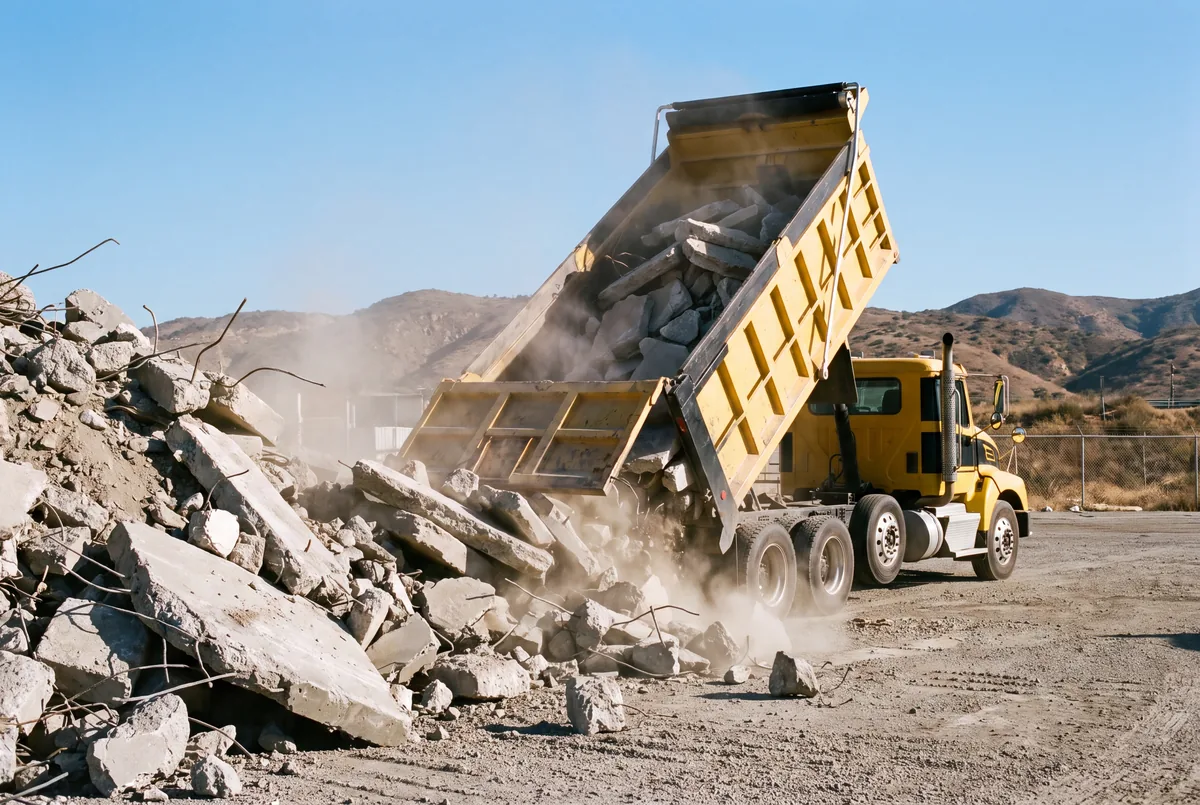
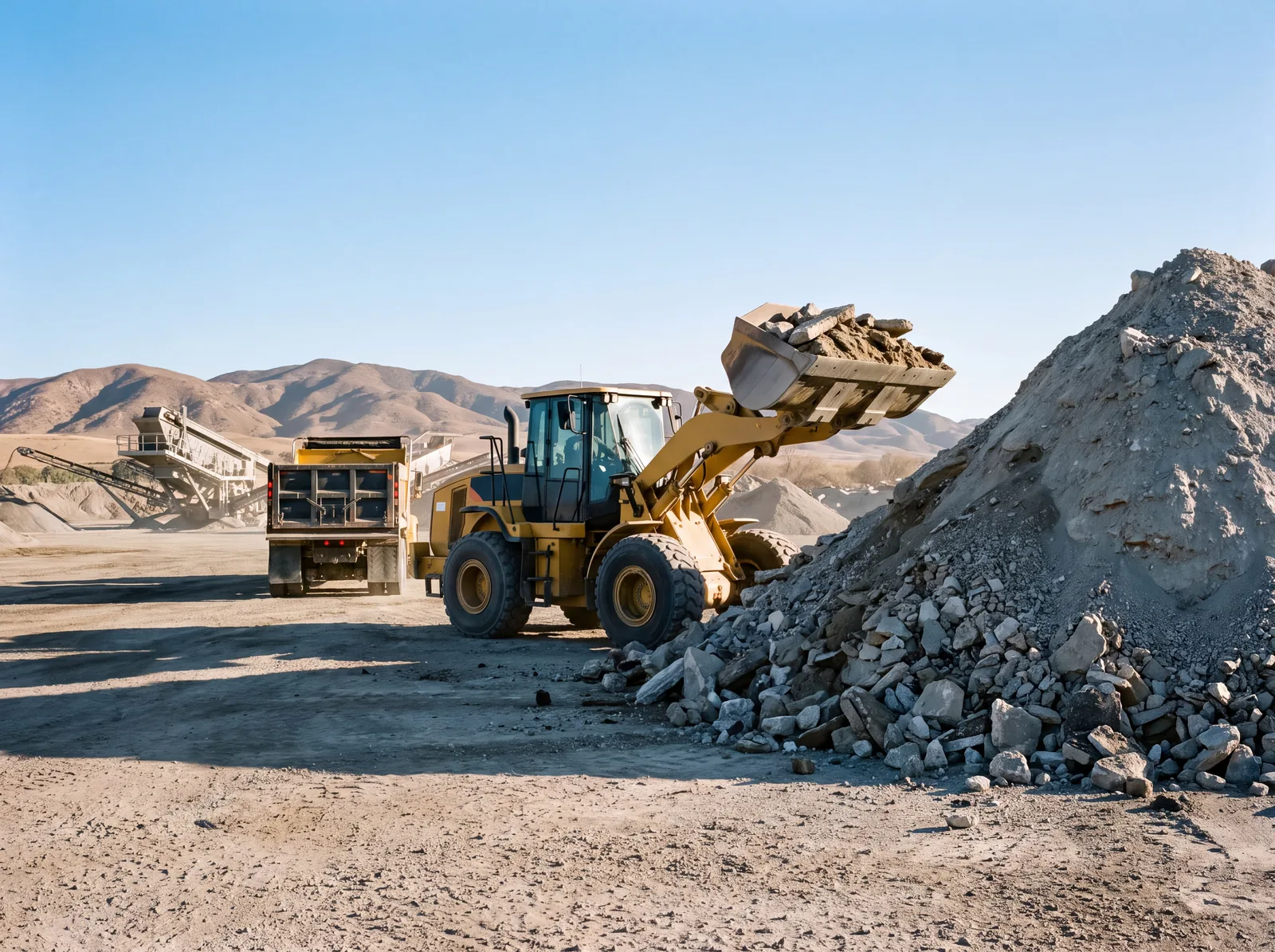
Walk into any recycling yard in Southern California and you will find two products that look similar from a distance and behave quite differently under a roller: crushed recycled concrete and recycled asphalt. Both are made from material that was torn out of a road, a lot, or a slab. Both are crushed and screened to a consistent size. Both cost less than virgin rock trucked in from a quarry. And both get used as base — the compacted layer that sits under a driveway, a pad, or a road and carries the load.
They are not interchangeable, though. Here is what separates them.
Crushed concrete base
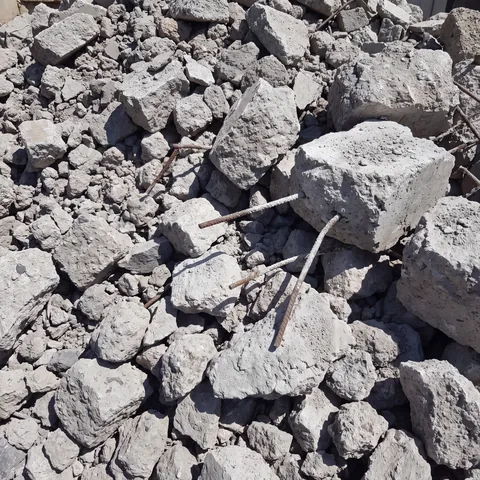
Crushed concrete is angular, light gray, and dusty. The angular shape is the point: the pieces lock together under compaction and resist moving sideways, which is exactly what you want under a slab. It also contains fines — the small particles and leftover cement — that help the layer bind as it is compacted and wetted.
Where it shines: base under concrete slabs, pads, and foundations; under paver patios and walkways; as structural fill and backfill behind retaining walls; and as a general road base. Many public agencies, including Caltrans, allow recycled concrete in their standard aggregate base specifications, so it is widely accepted on commercial and municipal work as well as residential.
Watch for: it is dusty when dry, and because it still contains cement it can be slightly alkaline, which is worth knowing if it will sit near sensitive landscaping.
Recycled asphalt
Recycled asphalt, often sold as millings or grindings, is dark, slightly oily to the touch, and contains the original asphalt binder. That binder is what makes it special. Compacted on a warm day, the particles soften just enough to knit together, and the surface firms up into something closer to a hard-packed road than a loose gravel lot. It sheds water instead of soaking it up, and it does not track dust the way crushed concrete does.
Where it shines: driveways, parking areas, equipment yards, farm and ranch roads, and anywhere you want a durable, low-dust driving surface without the cost of hot-mix paving. It also works as a base under new asphalt.
Watch for: it needs heat and compaction to perform. Spread it in a cool month without a roller and it stays loose. Spread it in lifts of a few inches, compact each lift, and let the sun do the rest.
Side by side
- Under a concrete slab or pavers: crushed concrete. It compacts into a stable, non-moving platform and plays well with a cement product on top.
- As a finished driving surface: recycled asphalt. It binds, sheds water, and stays put under tires.
- Backfill and general fill: crushed concrete, which compacts predictably and does not depend on temperature.
- Under a new asphalt lift: either works; recycled asphalt is a natural match for the material going over it.
- Dust control is a priority: recycled asphalt, hands down.
- Drainage behind a wall: crushed concrete, specified by size so water can move through it.
What about price and availability?
Both are sold by the ton or the yard and both are cheaper than quarry rock, because the raw material arrives at the yard already paid for by whoever dumped it. Which one is cheaper on a given day depends on what has come through the gate recently, so the honest answer is to call the yard and ask what is on the ground. Availability swings with the season — a run of repaving jobs fills the asphalt pile; a spate of demolitions fills the concrete pile.