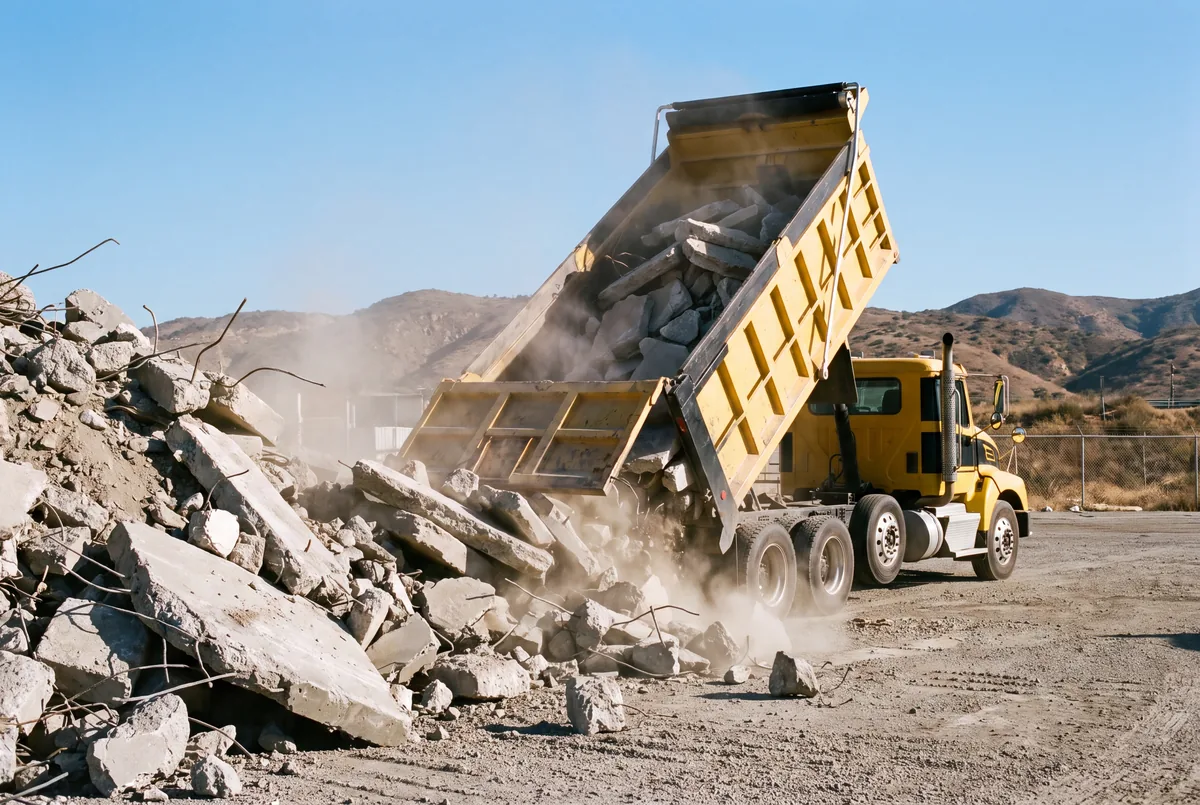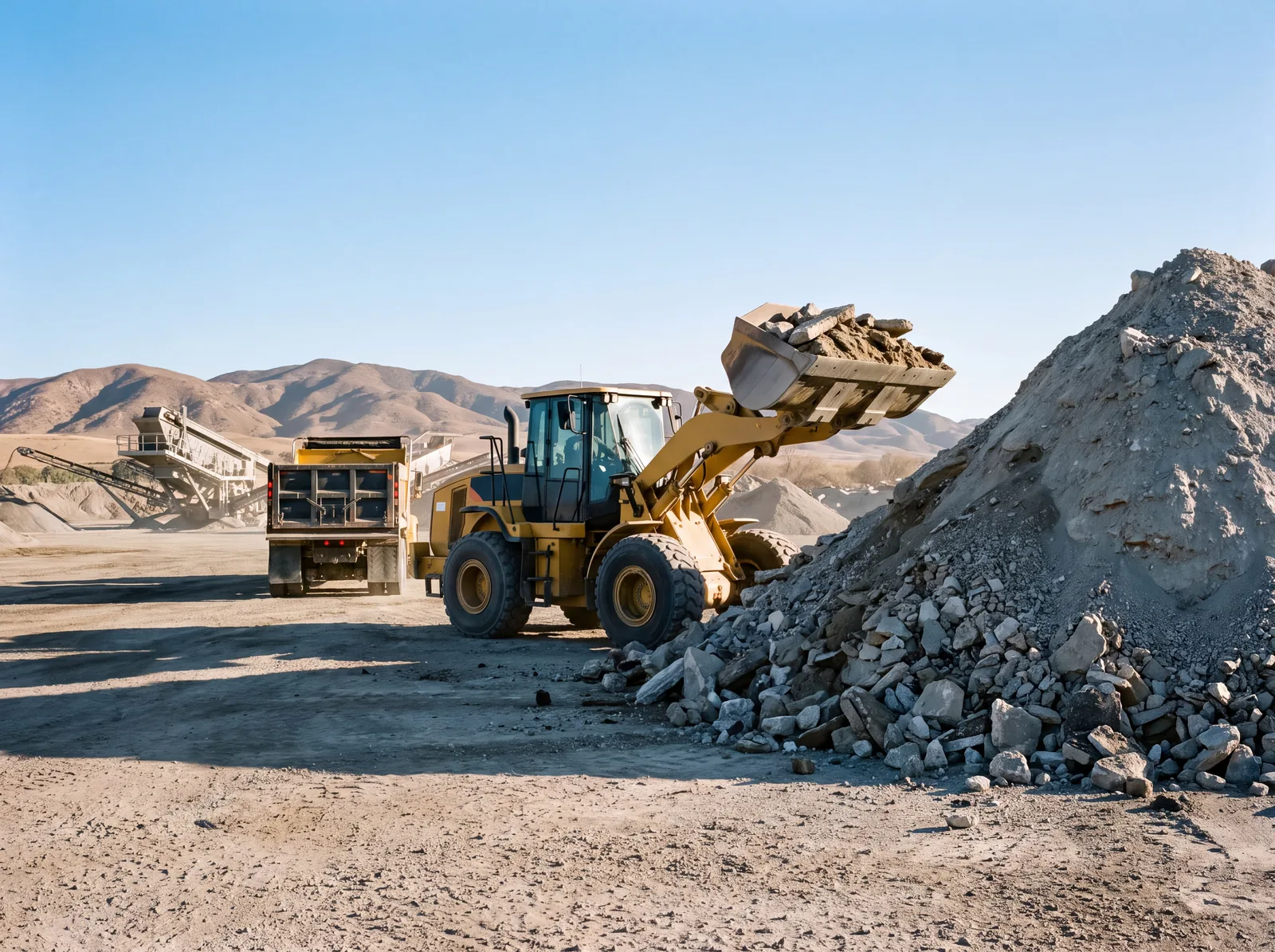
A recycling yard inspects every load that comes through the gate, and for good reason: one contaminated load can foul a whole stockpile of base material that other customers are going to buy. The inspection is quick, but it is not a formality. Loads get turned away every week, and more get charged extra for things that could have been fixed on site in minutes.
Here is what the gate crew is looking for, in the order they look for it, and what to do about each one before you load.
1. Dirt
The number one reason a load gets surcharged is soil mixed in with the concrete. It happens innocently — a slab is pried up, and a few inches of the dirt it was sitting on comes with it. Multiply that by a whole patio and you have a load that is a quarter dirt by volume.
Fix: knock the dirt off each piece as you load it, and never scoop the pile with a loader bucket that digs into the ground underneath. A load that is mostly dirt does not belong at a recycling yard at all.
2. Oversize pieces
Most yards cap pieces at about 2 × 2 × 2 feet. The reason is mechanical: anything bigger will not feed the crusher without being broken down again by hand or with a hammer attachment, and that costs time. A whole footing or a four-foot slab section will be charged extra or refused.
Fix: break slabs down before loading. On a driveway, a demolition hammer or a skid steer with a breaker makes short work of it. By hand, a sledgehammer on a slab that is already cracked and propped up on a block goes faster than people expect. Aim for pieces you could lift with two hands.
3. Rebar and wire
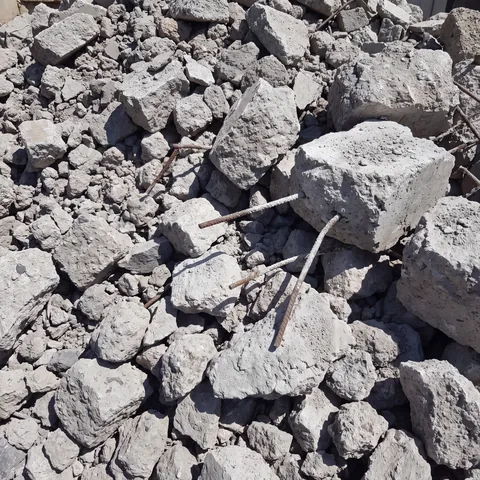
Reinforced concrete is normal and accepted; nobody expects you to strip every bar. The problem is excess — long bars sticking out of pieces, tangles of wire mesh, or chunks that are more steel than concrete. Those jam equipment and have to be pulled out by hand.
Fix: cut rebar back flush or nearly flush with the concrete using bolt cutters or an angle grinder with a cutoff wheel. Pull wire mesh off in sheets as the slab comes up and set it aside for a scrap-metal recycler, where it actually has value.
4. Trash and the wrong materials
Wood, plastic, drywall, roofing, bagged garbage, carpet, pipe, and anything hazardous — none of it can go in a concrete or asphalt load. Even a few pieces of lumber in a pile of rubble will get a load flagged, because they will end up in the finished base material.
Fix: keep the concrete pile separate from the general demolition pile from the first swing of the hammer. It is far easier to keep them apart than to sort them later.
5. Mixed concrete and asphalt
Many jobs produce both: a concrete curb and an asphalt lot, say. Some yards process them separately because the products are different. Mixed loads may be accepted, downgraded, or refused depending on the yard and the day.
Fix: keep them separate on the trailer if you can, and call the yard before you leave if you cannot. A thirty-second phone call settles it.
The checklist
- 1Concrete and asphalt only. Nothing else in the load.
- 2No dirt. Knock it off, do not dig it up.
- 3Pieces no larger than 2 × 2 × 2 feet.
- 4Rebar cut back; wire mesh removed.
- 5Tarp or strap the load so it stays put on the freeway.
- 6Call the yard if anything about the load is unusual.