A cracked patio or a heaving driveway is a project a capable homeowner can take on without a contractor. The work is simple. It is also heavy, loud, dusty, and takes longer than you think. This guide is written for the person who is deciding whether to do it, and then for the person who has decided and wants to do it right.
First: should you?
Concrete weighs about 150 pounds per cubic foot. A typical four-inch patio works out to roughly 50 pounds per square foot, so a modest 10-by-12-foot patio is around 6,000 pounds of rubble — three tons that you will break, lift, load, and haul. A two-car driveway can be ten times that. If the slab is thicker than four inches, heavily reinforced, or bigger than a few hundred square feet, this is the point to get a quote from a demolition contractor and compare it honestly against a weekend or two of your time plus rentals and disposal.
If it is a patio, a walkway, or a short driveway and you have a strong back and a helper, keep reading.
Before you swing anything
- Call 811 before you dig. It is free, it is required, and gas and electric lines run under more patios than people expect. Allow a couple of business days for utilities to mark.
- Check whether the slab is attached to the house foundation, a pool, or a wall. Breaking concrete that is structurally tied to something else is a different job.
- Look for signs of reinforcement. Wire mesh and rebar change the technique and the disposal.
- Decide where the rubble is going before you start. More on this below, because it is the step most people leave until the pile is already in the driveway.
Tools
- Safety first: safety glasses, hearing protection, heavy gloves, long sleeves, boots, and a respirator or at least a good dust mask. Concrete dust contains silica, which is a genuine lung hazard. Keep the slab wet while you break it.
- A sledgehammer (a 10- or 12-pound head) and a pry bar for thin, unreinforced slabs.
- An electric demolition hammer, rented by the day, for anything thicker than three inches or larger than a small patio. It turns a brutal job into a manageable one.
- Bolt cutters or an angle grinder with a cutoff wheel for wire mesh and rebar.
- A wheelbarrow with a good tire, or better, a rented dump trailer parked as close to the work as possible.
Technique
- 1Start at an edge or an existing crack. Pry up one corner so the slab is unsupported underneath; concrete breaks far more easily when there is air beneath it.
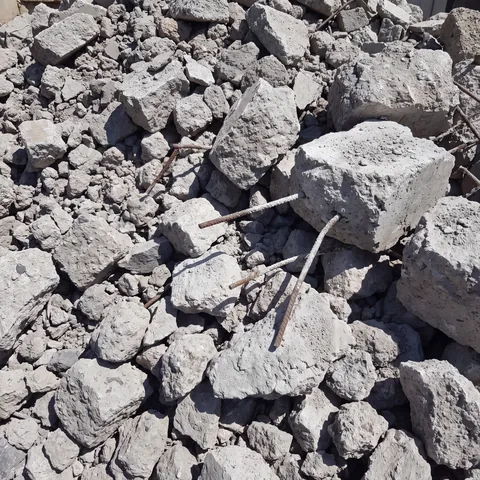
- 2Work in a grid. Strike a foot or so in from the edge, then move along. You are trying to make pieces you can lift with two hands — roughly the size of a cinder block or two. That is also the size a recycling yard will accept.
- 3As pieces come free, cut any mesh or rebar back flush and set the steel aside in its own pile.
- 4Keep dirt off the rubble. Lift pieces up; do not drag them through the soil. The cleaner the pile, the cheaper and easier it is to get rid of.
- 5Load as you go. A pile of broken concrete sitting in the yard for a week gets handled twice.
The part everyone forgets: getting rid of it
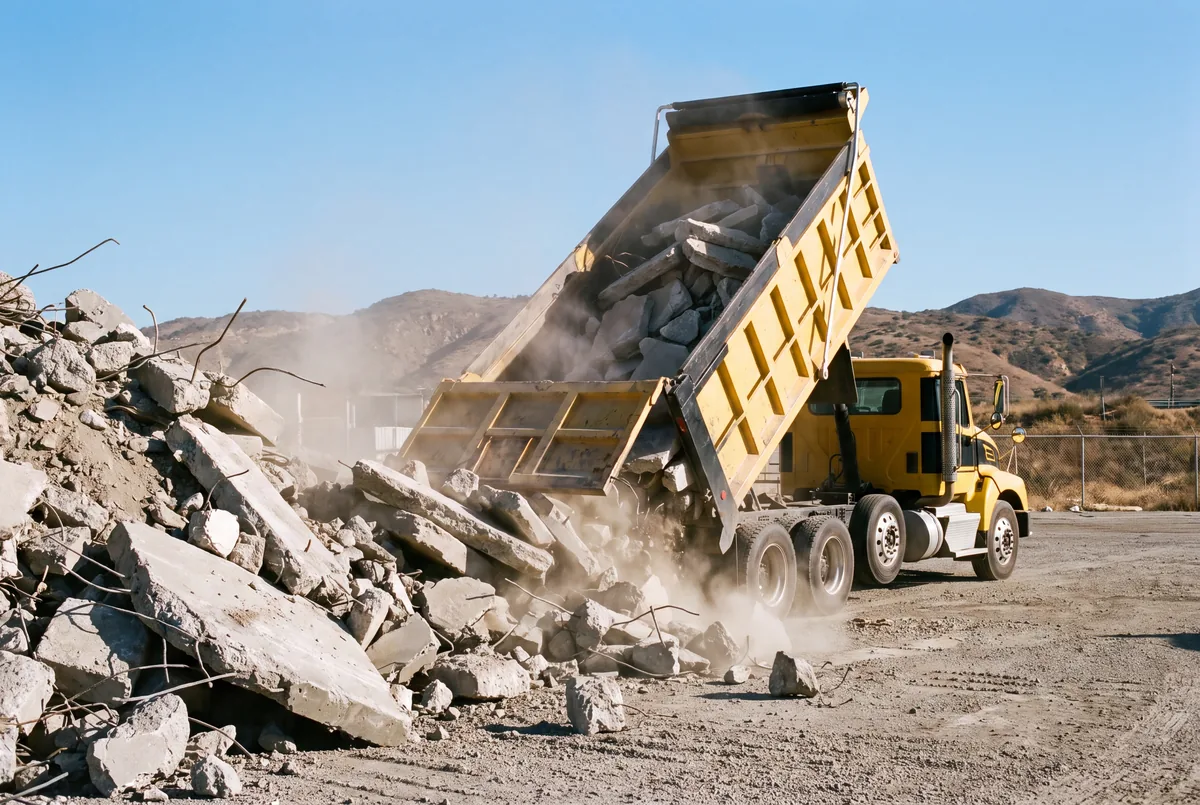
Broken concrete cannot go in the trash, and most curbside bulky-item programs will not take it. Your real options are a rented dump trailer and a trip to a recycling yard, a container dropped at the house that someone else hauls, or a hauling service that comes to you.
If you haul it yourself, go to a concrete recycling yard rather than the landfill. The load is cheaper to tip if it is clean, and the material gets reused. Check the yard’s rules before you load — piece size, no dirt, rebar cut back — because they are the same rules that make the breaking technique above work.
If you would rather not rent, load, and drive, a hauling service drops a container in your driveway, you fill it over the weekend, and they take it away. For many homeowners that is the difference between a project that gets done and one that sits half-finished.